Notice: Function _load_textdomain_just_in_time was called incorrectly. Translation loading for the templately domain was triggered too early. This is usually an indicator for some code in the plugin or theme running too early. Translations should be loaded at the init action or later. Please see Debugging in WordPress for more information. (This message was added in version 6.7.0.) in /home2/barod9359b84dd6h/public_html/wp-includes/functions.php on line 6131

Notice: Function _load_textdomain_just_in_time was called incorrectly. Translation loading for the unlimited-elements-for-elementor domain was triggered too early. This is usually an indicator for some code in the plugin or theme running too early. Translations should be loaded at the init action or later. Please see Debugging in WordPress for more information. (This message was added in version 6.7.0.) in /home2/barod9359b84dd6h/public_html/wp-includes/functions.php on line 6131
Transforming Rural India: The Impact of Aadhaar Enabled Payment System (AePS) – Access Computech
Deprecated: Function WP_Dependencies->add_data() was called with an argument that is deprecated since version 6.9.0! IE conditional comments are ignored by all supported browsers. in /home2/barod9359b84dd6h/public_html/wp-includes/functions.php on line 6131

Transforming Rural India: The Impact of Aadhaar Enabled Payment System (AePS)

Home     >     Blog

November 15, 2024 | Admin

Transforming Rural India: The Impact of Aadhaar Enabled Payment System (AePS)

What is AePS?

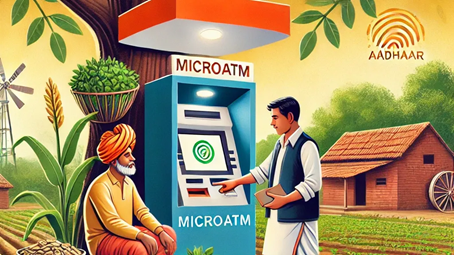
The Aadhaar Enabled Payment System (AePS), spearheaded by the National Payments Corporation of India (NPCI), allows users to perform basic banking transactions using their Aadhaar number and biometric authentication. Without the need for debit cards, PINs, or smartphones, AePS enables cash withdrawals, deposits, balance inquiries, and even fund transfers through local Business Correspondents (BCs) equipped with MicroATMs.

In essence, AePS transforms local shops and kiosks into banking hubs, ensuring that even the most remote villages have access to financial services.

AePS and the Rural Economy

1. Financial Inclusion at the Grassroots: AePS empowers individuals in rural areas who previously lacked access to formal banking. Farmers, laborers, and small business owners can now access their bank accounts without traveling long distances to a branch.
2. Efficient Government Welfare Distribution: Through AePS, schemes like the Direct Benefit Transfer (DBT) ensure that subsidies, pensions, and wages reach beneficiaries directly, eliminating middlemen and reducing leakages. For example, MGNREGA wages and LPG subsidies are now credited seamlessly into Aadhaar-linked accounts, providing a lifeline to rural households.
3. Empowering Women Entrepreneurs: Women in rural India often face challenges in accessing financial services. AePS is transforming this narrative by making banking accessible at their doorstep. Microfinance initiatives and government programs have leveraged AePS to disburse loans, enabling women to start small businesses and contribute to household incomes.
4. Job Creation Through Business Correspondents: AePS has created a parallel ecosystem of employment by appointing Business Correspondents in rural areas. These individuals, equipped with MicroATMs, not only earn a livelihood but also act as critical enablers of financial inclusion in their communities.
5. Boosting Digital Literacy and Trust in Banking: AePS introduces rural populations to formal banking systems in a user-friendly manner. This gradual exposure builds trust in digital banking, encouraging savings and investments that fuel economic growth.

Real Stories of Impact

• The Farmer’s Relief: A farmer in Bihar no longer has to travel miles to the nearest bank to withdraw money for seeds and fertilizers. AePS enables instant cash withdrawals at the local BC, saving time and effort.

• Entrepreneurship in Villages: A small shop owner in a remote village in Maharashtra acts as a BC, providing AePS-enabled services to hundreds of villagers while earning an additional income.

Challenges and the Way Forward

While AePS has significantly improved financial accessibility, it isn’t without challenges:

1. Connectivity Issues: Many rural areas still face inconsistent internet connectivity, which can disrupt AePS transactions.

2. Biometric Errors: Wear and tear of fingerprints, particularly among laborers, often leads to transaction failures.

3. Awareness Gap: Educating rural populations about AePS and its benefits is an ongoing effort.

To address these challenges, the government and financial institutions need to invest in robust infrastructure and targeted awareness campaigns. Leveraging mobile connectivity and enhancing biometric technology can further strengthen AePS operations.

The Road Ahead

AePS is not just a payment system; it is a lifeline for rural India, driving financial inclusion and economic growth. As the government and private players continue to expand its reach, AePS holds the potential to revolutionize the way rural India banks, transacts, and prospers.

Conclusion

The Aadhaar Enabled Payment System has turned the dream of financial inclusion into reality for millions of rural Indians. By simplifying banking and enabling access to essential services, AePS is fostering a more equitable and empowered rural economy. Let us continue to build on this momentum and ensure that no corner of India is left behind in its pursuit of progress.

The success of AePS is a testament to the power of technology in empowering lives and bridging gaps. With continued innovation and collaboration, AePS will remain a cornerstone of India’s journey toward a financially inclusive future.

Related Posts